
Office Desks: How Do You Choose the Right Desk for Your Office?

What Are Office Desks?
Office desks are work surfaces designed to provide a dedicated area for employees to work, use computers, organize documents, and perform daily office tasks.
An office desk can be a simple work surface or a more complete unit with drawers, storage compartments, cable-management features, and additional work areas.
Office desks are available in different shapes, sizes, materials, and configurations. The right choice depends on the type of work being performed, available office space, storage requirements, and the number of people using the office.

Why Are Office Desks Important?
A suitable office desk provides a dedicated space for completing daily tasks.
It can accommodate equipment such as:
Desktop computers
Monitors
Laptops
Keyboards
Telephones
Documents
Printers
Stationery
The right desk can also help organize the workspace and make better use of the available office area.
For businesses, selecting suitable desks is important when setting up a new office, expanding a workplace, or replacing old furniture.
Types of Office Desks
Different desk designs serve different purposes.
1. Standard Office Desks
Standard office desks provide a straightforward work surface for everyday office activities.
They can be suitable for:
Administrative employees
Reception areas
Home offices
Small businesses
General workspaces
They are often available with or without drawers and additional storage.
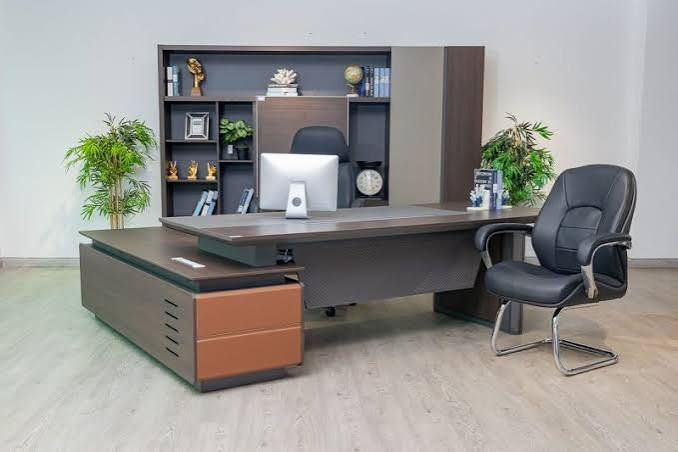
2. Executive Office Desks
Executive desks are generally larger and may provide additional workspace and storage.
They can be suitable for:
Managers
Directors
Private offices
Meeting areas
When choosing one, consider the available room size because a large desk can significantly affect office movement.
3. Computer Desks
Computer desks are designed around computer-based work.
Depending on the design, they may include:
Cable-management openings
Monitor space
Keyboard areas
CPU compartments
Storage drawers
Choose a design that can accommodate the equipment actually used by the employee.
4. L-Shaped Office Desks
L-shaped desks provide two connected work surfaces.
They can provide additional space for:
Computers
Documents
Writing
Meetings
Office equipment
They can also make efficient use of suitable corners.
5. Reception Desks
Reception desks are designed for front-office environments.
They may provide:
Customer-facing space
Employee work space
Storage
Cable management
Space for computers and telephones
The design should suit both the reception area and the organization's branding or office layout.
6. Workstation Desks
Workstation desks are designed for employee work areas and can be arranged individually or in groups.
They may include partitions, storage, and cable-management features.
They are commonly used in open-plan offices.
7. Writing Desks
Writing desks provide a relatively simple work surface without extensive built-in storage.
They can be useful when you need a clean and flexible workspace.
How Do You Choose the Right Office Desk?
Choosing an office desk requires more than selecting a design that looks good.
Consider the following factors.
1. Measure Your Office Space
Start by measuring the room.
Record:
Room length
Room width
Door locations
Window locations
Columns
Electrical outlets
Existing furniture
Also leave enough space for employees to move comfortably around the desk.
2. Consider the Desk Size
The desk should provide enough surface area for the user's daily work.
Think about whether the employee needs space for:
One monitor
Multiple monitors
Laptop
Keyboard
Mouse
Documents
Telephone
Printer
Writing materials
A desk that is too small can quickly become cluttered.
3. Consider Desk Height
Desk height affects how the desk works with the user's office chair.
The user should be able to position the chair so that the working surface can be used comfortably without excessive reaching or awkward positioning.
If multiple employees will use the desks, consider whether adjustable-height desks would be useful.
4. Check Storage Requirements
Some office desks include built-in storage.
Possible options include:
Drawers
Pedestals
Cabinets
Shelves
Side storage units
If the employee needs to store many documents, consider combining the desk with a filing cabinet or office storage cabinet rather than making the desk unnecessarily large.
5. Consider Cable Management
Modern desks often need to accommodate several cables.
These may include:
Power cables
Monitor cables
Network cables
Telephone cables
Printer cables
Cable holes, trays, and routing channels can help keep the workspace organized.
What Materials Are Used for Office Desks?
Office desks can be made from different materials.
MDF and Engineered Boards
These materials are commonly used for desk surfaces and panels.
They can provide a practical and relatively consistent surface.
Laminated Surfaces
Laminate finishes can make desks easier to clean and can provide different appearance options.
Solid Wood
Solid wood can provide a distinctive furniture appearance and may be used in selected office desk designs.
Metal
Metal is commonly used for frames, legs, brackets, and support structures.
The best material depends on the intended use, durability requirements, appearance, and budget.
Office Desks for Small Offices
Small offices require careful space planning.
Consider:
Compact desks
Corner desks
Wall-facing desks
Modular desks
Desks with integrated storage
L-shaped desks where appropriate
Before buying, measure the available space and identify door openings, windows, walkways, and power outlets.
Avoid filling the room with desks without leaving sufficient movement space.
Office Desks for Large Offices
Large offices may require multiple desks with a consistent design.
You can organize desks according to:
Departments
Teams
Job functions
Employee numbers
Equipment requirements
For larger projects, plan the placement of power outlets, network connections, storage, meeting areas, and walkways before installation.
Office Desks and Ergonomics
A desk should work properly with the user's office chair and equipment.
Consider:
Desk height
Chair height
Monitor position
Keyboard position
Legroom
Foot space
Screen distance
The desk should provide enough legroom so that the user can sit comfortably.
Avoid placing storage units or other objects where they restrict the user's legs.
Office Desk Storage Options
Depending on the design, an office desk can include:
Drawers
Pedestals
Side cabinets
Shelves
CPU compartments
Overhead storage
Choose storage according to what the employee actually needs.
For example, an employee who mainly works digitally may need less document storage than someone who handles large amounts of paperwork.
Office Desks vs Office Workstations
An office desk generally provides a work surface.
An office workstation can combine a work surface with other components such as:
Partitions
Storage
Cable management
Multiple work areas
Integrated accessories
A basic desk may be appropriate for an individual workspace.
A workstation system may be more suitable when setting up several employee work areas.
Office Desks vs Executive Desks
An executive desk is generally designed with a larger work area and may include additional storage or a more substantial construction.
A standard office desk may be more compact and practical for everyday employee work.
The choice should depend on the user's requirements, office size, equipment, and available budget.
Common Office Desk Problems
Desk Surface Becomes Damaged
Scratches, stains, swelling, or edge damage can occur with regular use.
Use suitable cleaning methods and avoid exposing surfaces to excessive moisture.
Desk Becomes Unstable
Possible causes include:
Loose fasteners
Damaged legs
Uneven flooring
Worn supports
Inspect the frame and fasteners before continuing to use an unstable desk.
Drawers Stop Working
Check for:
Obstructions
Misalignment
Damaged runners
Overloading
Do not force a drawer that is stuck.
Cable Clutter
Loose cables can make the workspace difficult to manage.
Use cable trays, clips, sleeves, or suitable routing channels.
How Do You Maintain Office Desks?
Regular maintenance can extend the useful life of an office desk.
Clean the Surface
Remove dust and spills regularly.
Avoid Excessive Moisture
Use suitable cleaning products for the desk's material and finish.
Check Fasteners
Inspect screws, brackets, legs, and support components.
Avoid Overloading
Do not place equipment that exceeds the desk's intended load capacity on the surface.
Protect the Surface
Use suitable mats or protective surfaces where necessary.
How Do You Organize an Office Desk?
A good desk arrangement can make everyday work easier.
Keep frequently used equipment within comfortable reach.
For example:
Monitor in a suitable viewing position
Keyboard and mouse in a comfortable position
Frequently used documents nearby
Less frequently used items in storage
Avoid allowing documents, cables, and equipment to occupy the entire work surface.
Where Can You Buy Office Desks in Kenya?
If you need office desks in Kenya, first determine the type of work the desk will support and measure the available office space.
Before purchasing, consider:
Desk dimensions
Desk height
Work surface
Storage
Materials
Cable management
Number of users
Office layout
Buy Office Desks in Nairobi
Looking for office desks in Nairobi? Contact Jobel Services and ask about available office furniture and office desk solutions.
You can also visit Jobel Services at Gikomba, Beaver House, opposite NCBA Bank, Nairobi, to discuss your office furniture requirements.
Get the Right Office Desk
Do not choose a desk based only on appearance.
Send Jobel Services the required desk dimensions, photographs or measurements of your available office space, the equipment the desk needs to accommodate, and any storage requirements before purchasing.
This can help you identify a suitable office desk for your workplace.
Whether you need one desk for a home office, several desks for a business, or office furniture for a larger project, proper planning can help you avoid choosing desks that are too large, too small, or unsuitable for the intended work.
Need office desks in Kenya? Contact Jobel Services today or visit the shop in Gikomba, Beaver House, opposite NCBA Bank, Nairobi, and ask about suitable office desks and office furniture solutions.
Frequently Asked Questions
What are office desks used for?
Office desks provide a dedicated work surface for computers, documents, writing, communication equipment, and other daily office activities.
What size office desk should I buy?
Choose a desk that provides enough space for the user's equipment and work while fitting comfortably within the available office area.
Are L-shaped office desks suitable for small offices?
They can be, particularly when the room has a suitable corner. However, measure the available space carefully because L-shaped desks can occupy more floor area than standard desks.
Do office desks come with storage?
Some do. Depending on the design, a desk may include drawers, cabinets, shelves, or other storage components.
How high should an office desk be?
The appropriate height depends on the desk design, user, chair, and working position. The desk should allow the user to work comfortably without forcing the shoulders, arms, or wrists into an awkward position.
What is the difference between an office desk and a workstation?
An office desk primarily provides a work surface. A workstation can combine a desk with features such as partitions, storage, cable management, and other components.
How can I keep office desk cables organized?
Use cable holes, trays, clips, sleeves, or routing channels to keep power, network, monitor, and other cables organized.
Can Jobel Services help me choose office desks?
Yes. You can provide the required desk dimensions, office measurements, photographs, equipment requirements, and storage needs to help identify a suitable option.
Conclusion
Office desks provide the main working surface for employees and can be designed for computers, documents, meetings, administration, and many other workplace activities.
When choosing office desks, consider the available space, desk dimensions, height, work surface, storage, materials, cable management, equipment requirements, and office layout.
Small offices may benefit from compact or corner desks, while larger workplaces may require multiple desks arranged according to departments or teams.
If you are looking for office desks in Kenya, contact Jobel Services or visit the shop in Gikomba, Beaver House, opposite NCBA Bank, Nairobi, to discuss your office furniture requirements.
Choosing the right office desk can provide a practical working surface while helping you make better use of available office space.

Comments